Skip to main content
re·search
AmE /rɪˈsɝːtʃ/ · BrE /rɪˈsɜːtʃ/
noun
Systematic inquiry into population change — fertility, mortality, and migration — to explain how age structure and social institutions evolve across time and place.
Demographic transition in Brazil
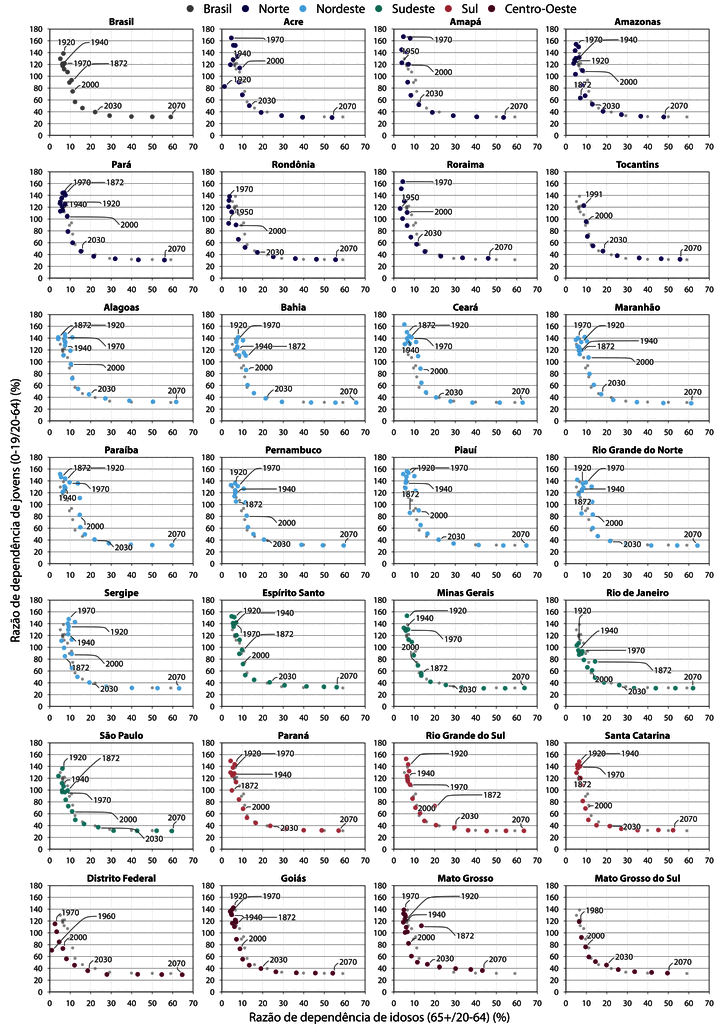
Historical census benchmarks and projections showing Brazil's transition from high mortality and fertility to an aged population structure.
The companion site provides growth rates, dependency ratios, and demographic dividend estimates for Brazil and federative units through 2070 (Turra & Fernandes (2026)).
World population aging as a function of period demographic conditions
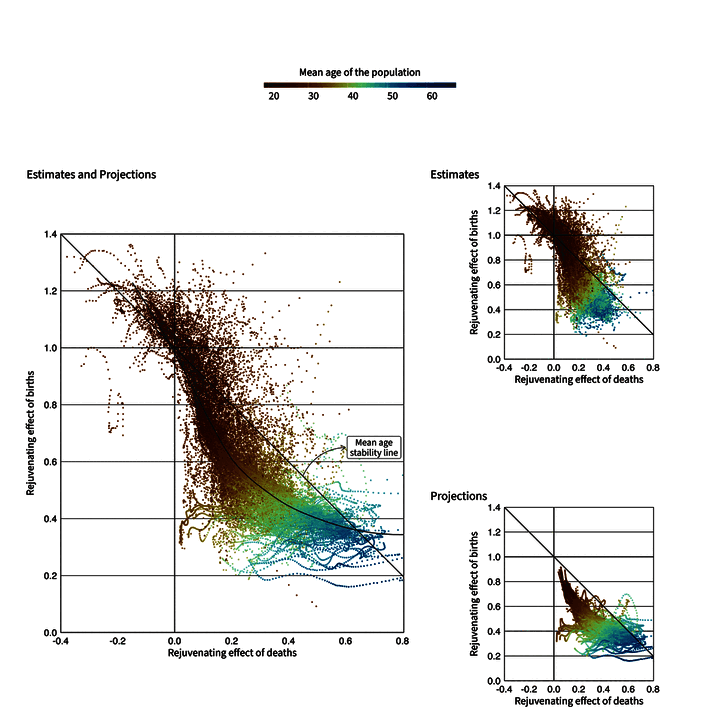
Period decomposition of population aging across 236 countries and areas, 1950–2100, using Preston–Himes–Eggers (1989) and UN World Population Prospects 2024.
The companion site provides interactive country-year estimates of rejuvenating effects and aging stages from Fernandes, Turra & Rios Neto (2023).
COVID-19 vaccination & age reporting, Brazil
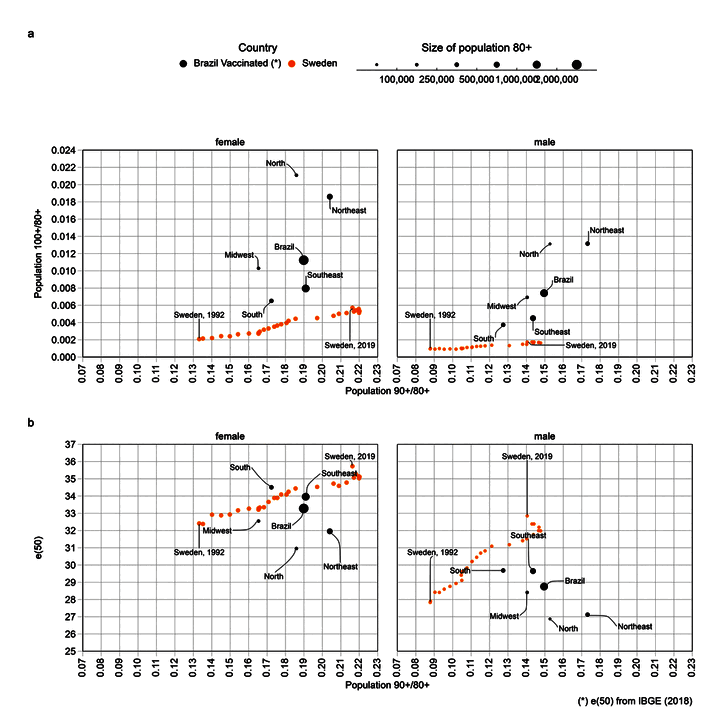
A demographic audit of age reporting in Brazil's national COVID-19 vaccination database, benchmarked against census data, projections, and Sweden.
The companion site provides R code and reference data for the first study comparing oldest-old population estimates from administrative vaccination records and census data in Brazil (Turra et al. (2023)).
Migration estimates, Brazil 1960–1980
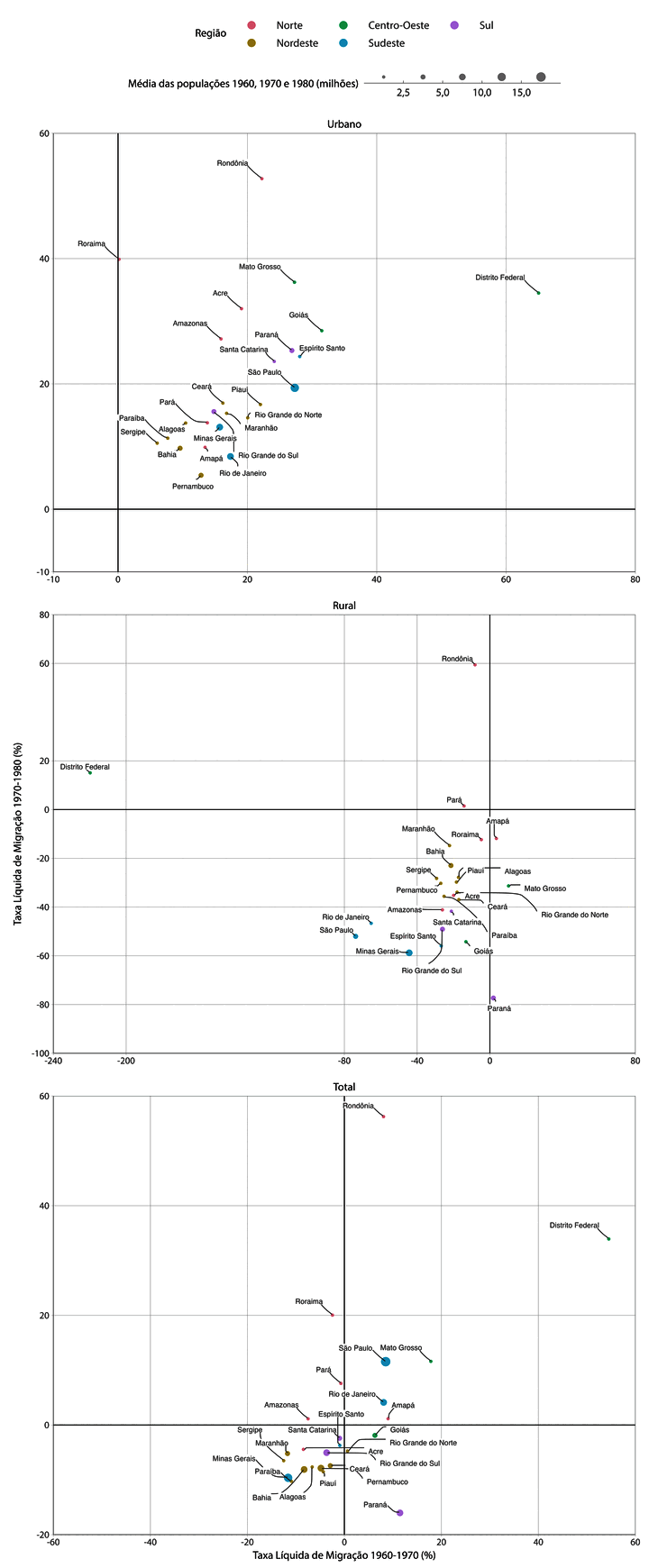
Net migration estimates by sex, age group, and urban/rural residence for Brazilian states during 1960-1970 and 1970-1980.
Between 1960 and 1980, rural Brazil lost 26 million people to its cities; the project documents those shifts with more than 6,500 public estimates from Fernandes & Carvalho (2024).